
what we offer
Our courses
It’s time to take charge of your summer!
Explore our course offer for 2026 and apply today.

This course focuses on building resilience and personal strength during times of uncertainty and challenge. Students explore mindset, communication, boundary-setting, and self-awareness through interactive and reflective activities. The course helps students to better understand their own personality and reactions to change. By the end, students gain practical tools for both personal and professional growth.
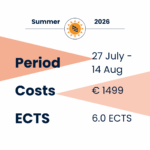
This 3 week course introduces students to all aspects of management consulting, and prepares them to integrate into the work field. Students will gather both theoretical knowledge and practical applications over day to day consulting life, the sectors and companies they work with, and the challenges faced in this role. The course also aims to prepare students interested in pursing this career through tips on the typical recruitment process.
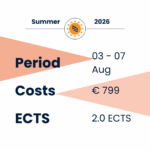
This course introduces data as a creative tool in the design process rather than just a way to evaluate outcomes. Students learn how everyday data, personal stories, and lived experiences can generate insights and inspire meaningful design concepts. Through hands-on exploration, data collection, and reflection, participants develop design ideas rooted in real-world context. The course shows how data can guide innovation in fields from healthcare to education.
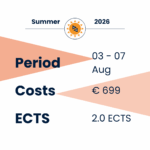
What does it matter what people speak when no one listens? How does listening relate to the world and society, and vice versa? This is a crucial question to understand in order to tackle many issues in all fields of life. This course will focus on the transdisciplinary inquiry of listening (what listening is) and its wider relation to society, through an exploration of the philosophy of listening and its application in psychology, neuroscience, anthropology, sociology and communication science.
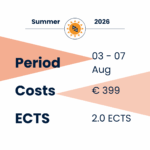
The world of policy and politics, governance and government can be murky with seemingly transparent and tangled connections. This course allows you to understand how a critical analytic and descriptive framework can help understand who is involved in the policy process, how it operates, and ultimately leads to a discussion about who is accountable.
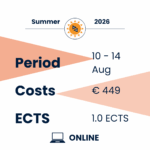
This course examines how religion and culture influence one another across different societies. Students compare Western and Islamic perspectives on faith, morality, and social order. Through historical and contemporary case studies, participants explore how religion shapes communities and identities. The course encourages critical reflection on belief, culture, and coexistence.
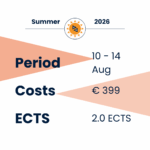
Relevant, evidence-based policymaking is key to achieving significant and sustainable change and fulfilment of the Sustainable Development Goals. In this course, you will be introduced to the fundamentals of public policy analysis tools that are commonly used throughout the world.

This course introduces students to data analytics in the open-source programming environment R. Through lectures and interactive, assignment-based tutorials, you will become familiar with three crucial aspects of data analytics in R: (i) basic objects and operations in R; (ii) working with data in R (management, analysis, and visualisation); and (iii) control flow and programming in R.

Negotiation and mediation are essential skills that, against common belief, can be studied and developed. By linking theory and practice, this course aims to increase your knowledge of negotiation and mediation theories and practical skills. Through core concepts like distributing value and active listening, alongside simulated practices, you will develop as effective negotiators and mediators.
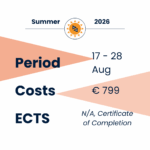
Wil je graag beter leren schrijven en jouw interviewvaardigheden verbeteren? Of droom je zelfs van een journalistieke carrière? Deze cursus is een mooie inleiding in effectief schrijven: van een pers- of nieuwsbericht, reportage, column, interview en wetenschapsjournalistiek tot het schrijven voor een website. De cursus is voor iedereen toegankelijk (van binnen én buiten de universiteit, jong en oud). Iedereen start op zijn eigen niveau.
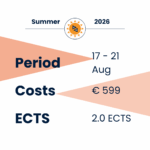
This course introduces students to data analytics in the open-source programming environment R. Through lectures and interactive, assignment-based tutorials, you will become familiar with three crucial aspects of data analytics in R: (i) basic objects and operations in R; (ii) working with data in R (management, analysis, and visualisation); and (iii) control flow and programming in R.
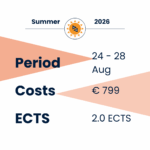
This course provides an overview of the crescent field of consumer neuroscience and explores the applications of neurosciences in different fields, such as neuroeconomics and neuromarketing. At the end of the course, you will be able to properly understand the potential and limitations of these applications, and develop innovative ways of using neuroscientific techniques in different contexts.
This course teaches students how to turn an idea into a viable business. Participants learn about business models, finance, market analysis, and intellectual property. Working in teams, students develop and refine their own startup concepts. The course blends theory with hands-on entrepreneurial practice.