
what we offer
Our courses
It’s time to take charge of your summer!
Explore our course offer for 2026 and apply today.
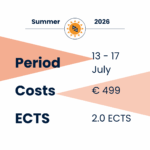
This course explores how social movements and counter-movements shape societies across the political spectrum. Using global case studies, students examine why people mobilize, how movements grow, and what leads them to succeed or decline. Topics include activism, repression, digital media, and political resistance. By the end, students gain insight into how collective action drives social and political change.

This course offers a comprehensive exploration of the major psychological disorders found in adults. You will examine the impact of biological, psychological and environmental causes in these disorders, and the relevance of gender, race and culture in their treatment. Contemporary issues like stigmas and new treatment research will also be discussed for effective application in a modern clinical practice.

This course explores how writers can maintain their own voice while using AI tools. Students learn how AI generates text and where its limits and risks lie. Through writing and revision exercises, participants practice using AI responsibly and critically. The course helps students make ethical, informed choices about academic writing.

This course focuses on building resilience and personal strength during times of uncertainty and challenge. Students explore mindset, communication, boundary-setting, and self-awareness through interactive and reflective activities. The course helps students to better understand their own personality and reactions to change. By the end, students gain practical tools for both personal and professional growth.

What does it matter what people speak when no one listens? How does listening relate to the world and society, and vice versa? This is a crucial question to understand in order to tackle many issues in all fields of life. This course will focus on the transdisciplinary inquiry of listening (what listening is) and its wider relation to society, through an exploration of the philosophy of listening and its application in psychology, neuroscience, anthropology, sociology and communication science.

This course examines how religion and culture influence one another across different societies. Students compare Western and Islamic perspectives on faith, morality, and social order. Through historical and contemporary case studies, participants explore how religion shapes communities and identities. The course encourages critical reflection on belief, culture, and coexistence.

Negotiation and mediation are essential skills that, against common belief, can be studied and developed. By linking theory and practice, this course aims to increase your knowledge of negotiation and mediation theories and practical skills. Through core concepts like distributing value and active listening, alongside simulated practices, you will develop as effective negotiators and mediators.